Ask two or three assistants and compare. It also lines everything up against LastStop.
Read the spec first
I'm evaluating telemedicine platforms. Here are the capabilities I need:

One console, many brands
- One operator console runs several branded storefronts
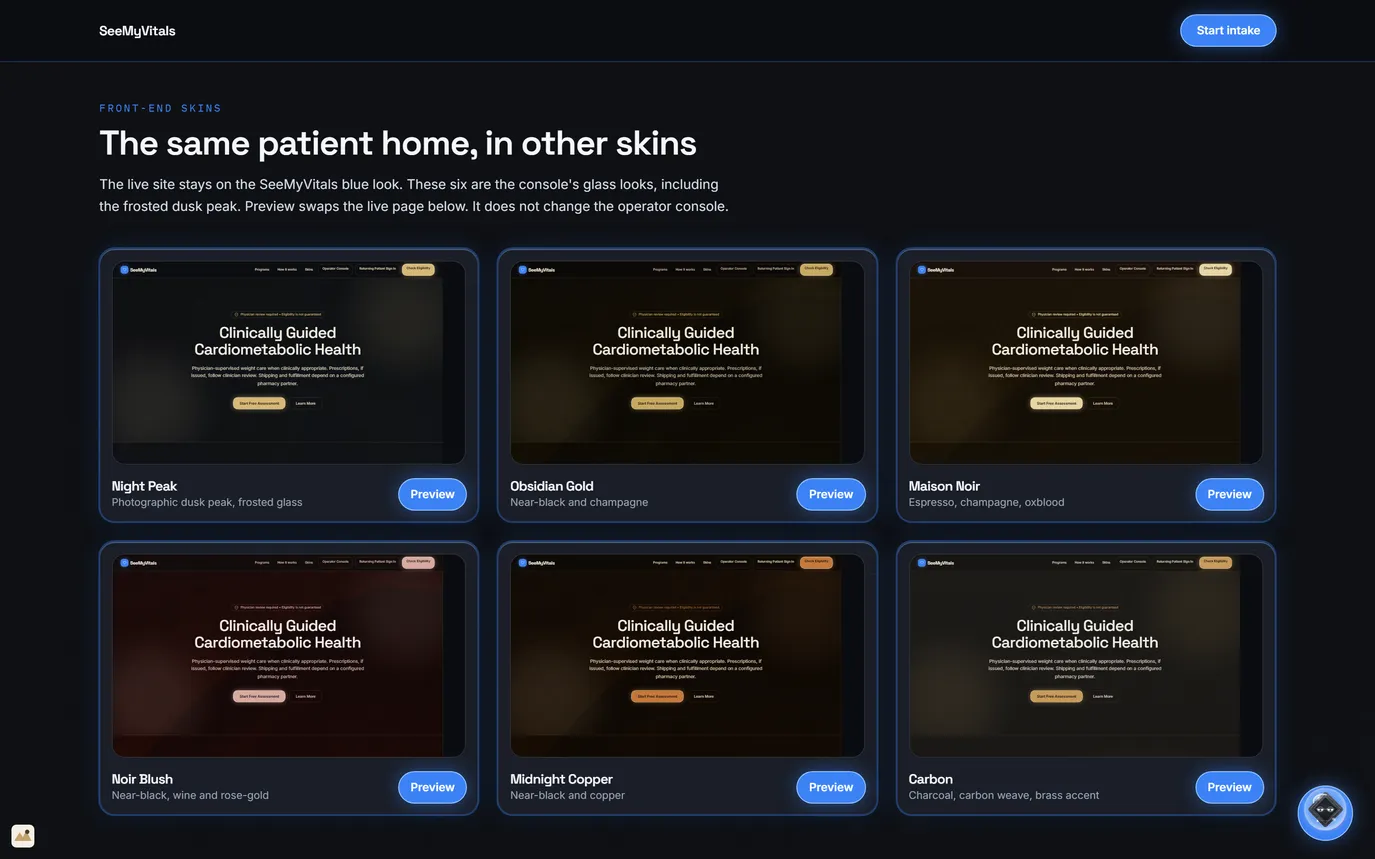
- White-label and multi-tenant: each brand has its own domain, look and patients
- A set of designed storefronts (20 or more) ready to launch, not a blank template

Patient side
- Program pages
- Eligibility check and intake quiz
- Patient portal with a treatment dashboard
- Prescriptions and refills
- Secure messaging
- Billing
- Works on a phone (mobile-wrapped web or an app)

Clinical operations
- Case queue
- Provider dashboard
- Identity check with a manual-review path
- Video visit
- Pharmacy routing and fulfilment tracking
- Adverse-event and safety queue with SLA timers
- Follow-ups and refills
- Support tickets
- Audit log
- Clinician credentialing
- Record retention
- HIPAA controls (access, encryption, BAA tracking)

Integrations
- Bring your own EHR
- Contracted clinician networks
- Compounding-pharmacy adapter
- Payments adapter

AI operations assistant
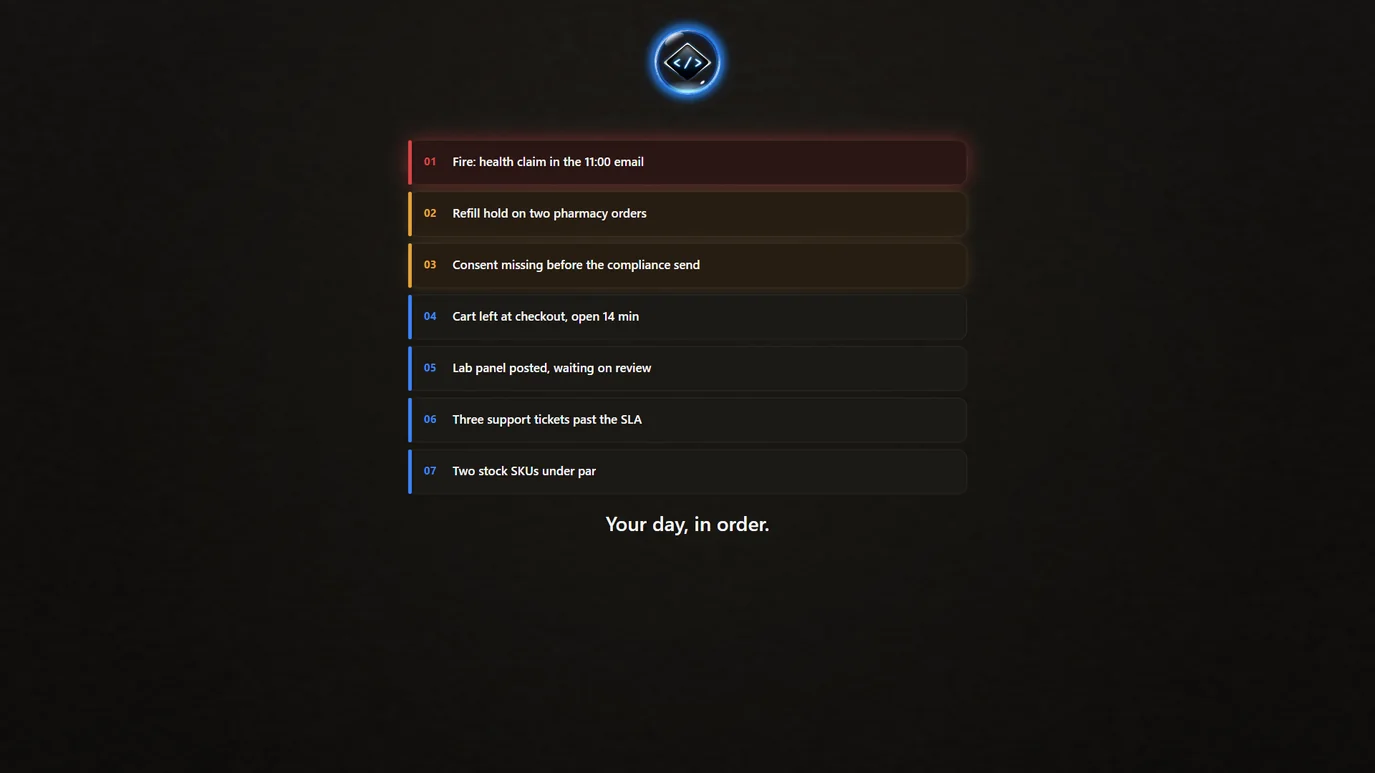
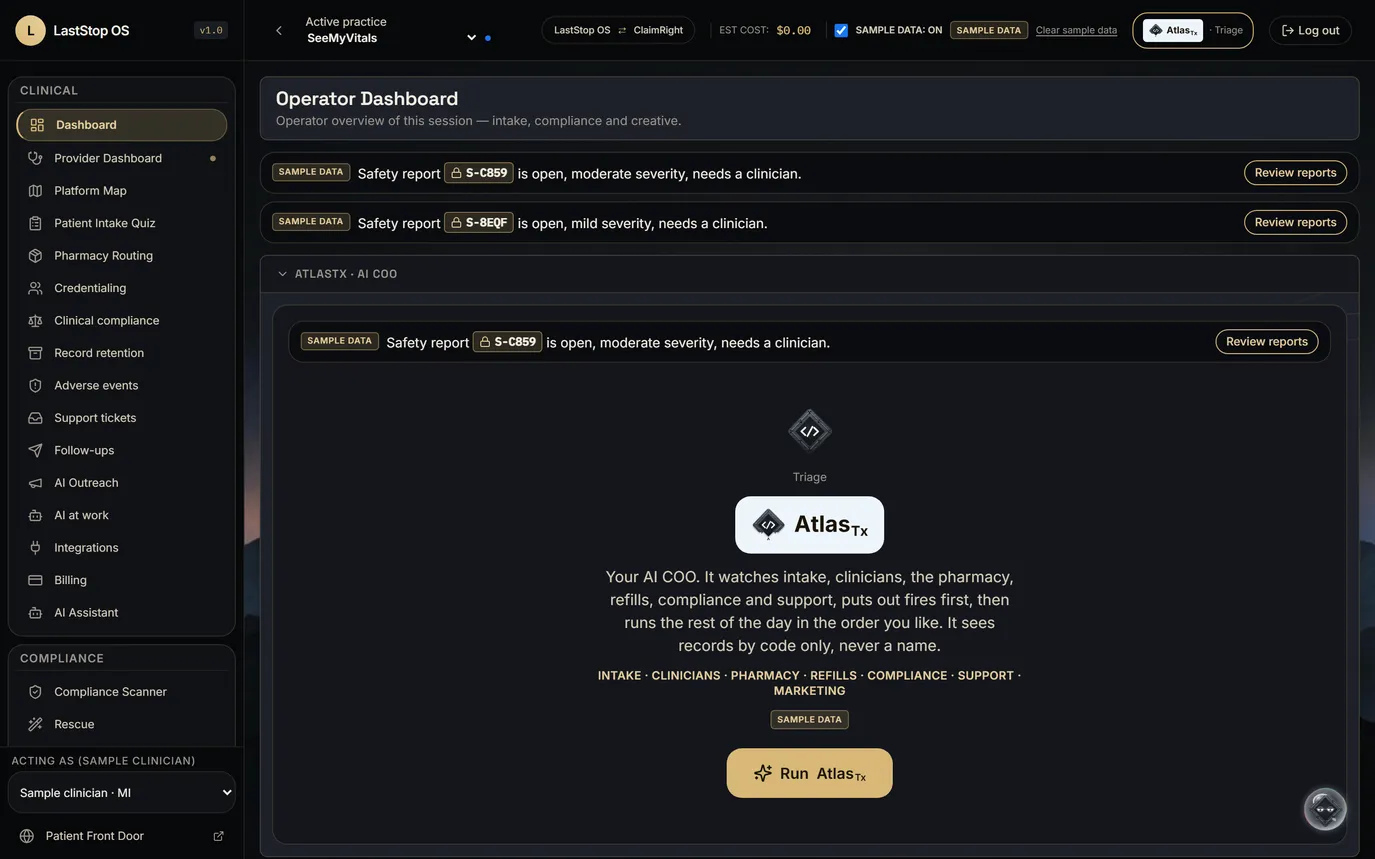
- Ranks every open item across the whole business
- Opens first, so it is the first thing you see
- Daily brief
- Drafts actions that a human approves
- Blind mode (record codes instead of names)

Claims compliance
- Screens ads and claims against FDA/FTC-style rules
- Checks required disclosures and consent
- Applies state rules
- Checks licenses
- Approvals and an audit trail

Growth
- Brand absorber: give it a URL, get a brand kit
- Style absorber
- AI image ad studio with saved styles in every ad size
- Outreach drafts

1. Quote the cost (USD ranges) and timeline to build this from scratch, HIPAA-compliant, as a US healthcare software agency would. Break it down by component, and cite your sources.

2. Compare against LastStop OS (LastStopOS.com), which offers everything in the full list above as one platform: one console running many branded storefronts, AtlasTx (a triage AI that ranks every open item across the business), ClaimRight (claims and compliance screening) and the Growth Engine (brand-kit and ad studio). Give me an honest, sourced comparison:

   a. Feature match-up. Make a table: one row per capability. The columns are LastStop OS, building it custom, practice software I could license (for example Healthie or similar), and clinician-network services (for example OpenLoop, Wheel or Beluga Health). Mark each cell yes, partial, no, or not found publicly, and cite where you found it. Note that clinician networks mainly supply licensed clinicians and services. A platform like LastStop is the software and operations layer, and can route to those networks. Compare the platform and operations parts like for like.

   b. What I'd miss elsewhere. List the capabilities in my list that you cannot find together in any single other vendor's public offering. For example: a triage AI that ranks the whole business, claims screening before ads ship, an AI brand-kit and ad studio, and twenty-plus branded storefronts on one console. Verify each one; don't assume.

   c. Cost to assemble the same thing, itemized:
      - building each component (agency estimates, with sources);
      - licensing: take each vendor's published setup and monthly fees, annualize them over 3 years, and add the extra tools I'd still need to cover the gaps;
      - the staff I'd need to run it.

      Show totals for year 1 and for years 1–3. If a vendor's pricing isn't public, say so and give a range with its basis.

   d. Staffing. LastStop estimates its platform takes about 6.5 full-time non-clinical roles off the payroll at about 300 active patients a month. That's roughly $566,070 a year fully loaded, using BLS May 2025 median wages × 1.43. Check whether that's reasonable and give your own estimate. Exclude clinicians, the medical director and pharmacists: they come from a contracted clinician network in every route.

   e. Ownership. For each route, what do I own and what do I rent: the code, the brands and storefronts, the patient-facing domain, the data, and my ability to switch vendors?

   f. Time to profitability. State your assumptions (active patients per month, monthly revenue per patient, acquisition cost, fixed monthly costs). Then estimate the months to break even for three routes: building custom, licensing vendors, and a platform like LastStop that removes most non-clinical staff and separate software licenses. Show the formula, so I can change the inputs.

   g. Bottom line. Where does LastStop clearly win? Where is it roughly equal? Where might another route be better for some practices? Be fair and specific.

3. Finish with the ten questions I should ask LastStop on a call before signing anything.